
Looking after wool with Lydia May Hann
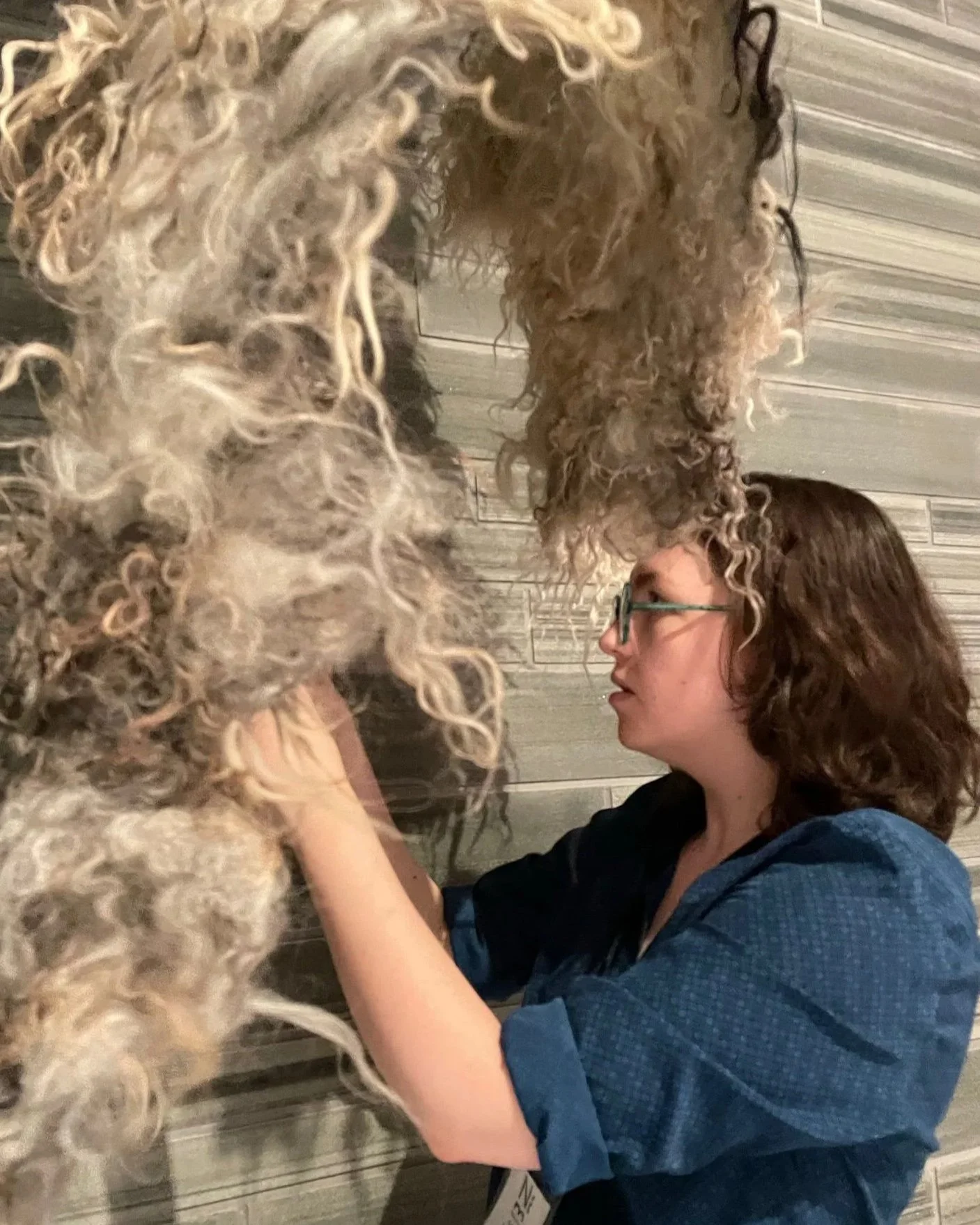
Image: Nasjonalmuseet
Lydia May Hann is a knitwear and textile designer/technician from Shetland. She is also a multimedia artist who has exhibited and performed around the world, including Oslo’s National Museum. Lydia uses knitting machines to create phenomenal patterns and felting that celebrates the varieties and complexities of wool.
To follow Lydia and find out more about her work you can click on these links to her website and Instagram page:
In the first part of this interview, Lydia told us about her family’s collection of wool jumpers that have been passed down through generations. In part 2, we discuss how to wash and care for wool garments, tips for wearing wool, as well as recent projects that Lydia has been working on!
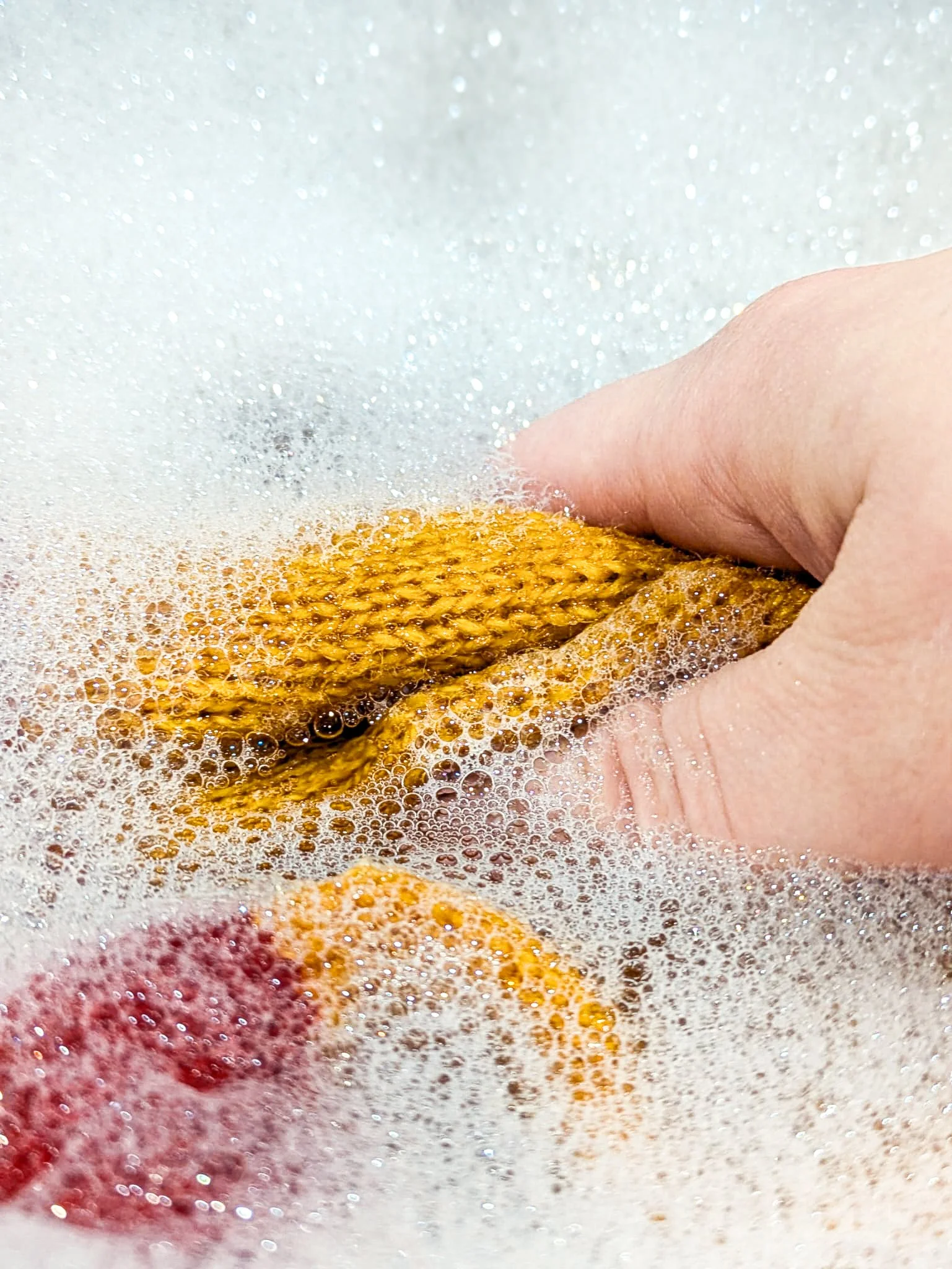
We just get all the wool out when we’re all home for Christmas or if we’re all home in the summer. All the jumpers come out and we check them all over, and do a big wash in the bath. I chuck them all in the bath with lukewarm water, usually I end up using Ecover, but if I have a wool wash I’ll use that, but most of the time Ecover does the job - the washing up liquid!”
(I looked shocked at this point and Lydia laughs. Some of the feedback we’ve had is that people are a bit worried about washing wool!)
This is Shetland wool! Probably a caveat to say is, you can be more aggressive with Shetland wool than you probably could with modern merino or any highly processed yarn. Shetland yarn is practically indestructible. I genuinely have put these jumpers in the washing machine, these jumpers are about 80 years old and I’ve put them in the machine on a wool cycle. They’ve withstood for so long, so unless I pop them on a boil wash or something they’ve not experienced before.
IMAGE: Rosie Andrews
When you try something new, there’s the initial shock, it’s not been treated this aggressively before, it finds all of the wear points really quickly, if you don’t wash it right it’s going to change because it’s brand new and it’s coming from ‘factory settings’ to whatever form it’s going to settle in to.
However, this is the old stuff that’s been through the wash, it’s lived a life and now it is what it is. So of course if I put them in a boil wash they will shrink, but Shetland yarn is a lot more resistant, especially the old stuff. It was spun with the lanolin. The cardigan I’ve got is basically waterproof because of just how thick and solid the yarn is. It’s worsted spun so it’s really solid, I don’t think even a boil wash would touch it.
So we literally wash them (the collection of jumpers) once a year, but that is because they’re jumpers for adults, unless we’re having a really good party - no one is throwing up on them! Nick will wear it every single day - I don’t actually know when the last time I washed the cardigan was - but because they’re pure wool, and they’re never really against your skin, they’re fine.
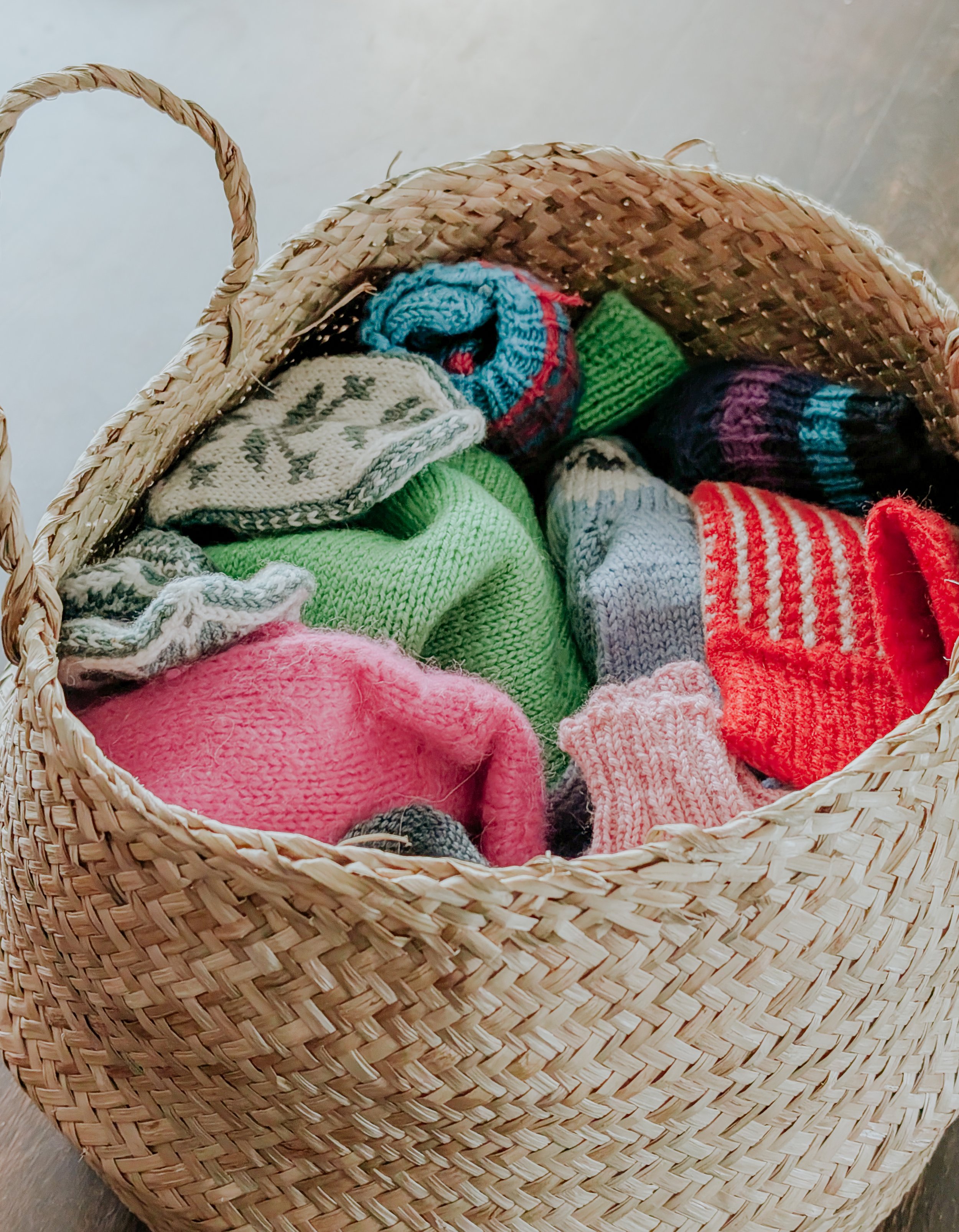
How are you looking after those softer modern pieces?
WASHING
I don’t have any wool that I’ve bought from a shop that I don’t chuck in the washing machine. It doesn’t need to get washed very often because it’s wool. Grandma almost only wears wool jumpers, she buys a lot from Wool Over. She’s 85, she’s not handwashing those jumpers, they go straight in the washing machine and I’ve never known her to shrink a jumper. If you have a modern washing machine, I’ll even use Ecover in the washing machine if it’s looking a bit dirty - but I’ll only do that with stuff where I know what it’s going to do.
I think everyone has the image that it’s going to felt, because it would have done in the 90s when the tech wasn’t so good and washing liquids were really harsh. Now our washing liquids are so gentle and careful of people having allergic reactions or all the clothes falling apart, that we’ve gone so far the other way that I think in a conventional washing machine you have to try - you’d have to put it on at 60 before it’s going to felt.
“If you put it on on the wool cycle, nothing bad is going to happen, 99.9% of the time!”
DRYING
You do have to look after it when you take it out, so there’s more faff, after it comes out of the machine to dry it properly. Drying it flat, you can’t put it on the washing line otherwise you’ll end up with it getting deformed.
Lydia’s routine for drying wool garments after they’ve been in the wash:
When it’s wet I roll it up in a towel, squeeze the water out, roll it back up in another towel, squeeze some more water out,
then lay it flat in a jumper shape on a flat surface. Or if your Shetland, you put on your lovely jumper board and size it to the size you want it to be!
Pressing out as much water as possible and laying it out flat is the step that takes up a bit more space and a bit more faff, after it’s come out the washing machine, and remembering not to put it in the tumble dryer!
You’re not doing that every week though?
No! The benefit of it being wool is that it’s going to take a long time before it feels dirty. So I’ll spot clean if something has just got a bit of food on it, then I’ll rinse whichever bit has the stain on it in the sink, rather than putting it in the wash.
Tips for wearing wool!
My big tip for absolutely everyone, because you know I love a neck scarf, is a cotton or silk neckerchief. At the point where the wool touches your neck, you can put the flap of it down the back, and if you’re wearing a long sleeved top, the bit that might irritate you is the bit that’s touching your neck. A little cotton kerchief, that’s just what they were invented for. They were invented to tuck under your clothes. If you look at the 1600s, and you can see they have kerchiefs tucked into their bodices, it’s another piece of cloth between your heavy wool garments and your skin.
So that’s my big tip, a very fashionable choice for anyone that gets irritated by their jumper touching their skin. If you look at photos of sailors they’ve all got their little kerchiefs on, it does the job.
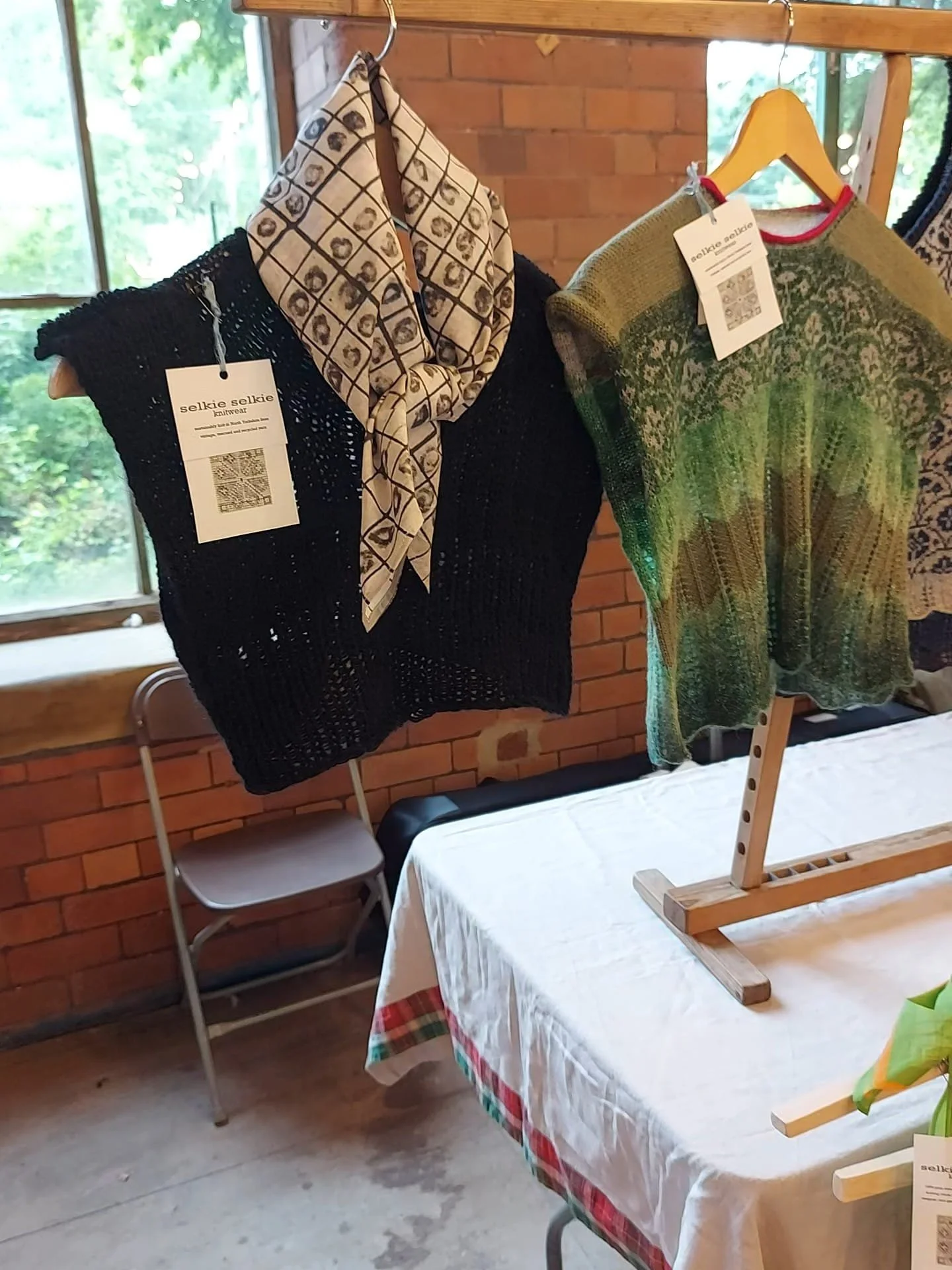
IMAGE: Garments from Lydia’s own brand Selkie Selkie knitwear.
You also maybe have to change your expectations of wool and what it’s going to feel like. Your body stops registering it after a while, most of the time for most people, it thinks ‘this is not a threat anymore, I’ll stop thinking about it, so you stop feeling it.
There is a difference, however, in overgarment wool and undergarment wool, they are different yarns with different purposes. From Shetland to merino to mohair, then the difference between worsted and woollen spun, that also changes how itchy it is.
The difference is the direction that the fibres are going when you spin them. If it’s worsted spun — you spend a lot of time making sure that all the fibres are going in the same direction, that’s going to be less itchy than if your fibres aren’t all going in the same direction, because then they’re sticking out (as in woollen spun yarn), it’s hairy, and that’s when it becomes itchy. If you look at a Fisherman’s gansey, an east coast gansey, it’s smooth and almost glossy. There’s no fluff sticking out of your yarn because whatever sheep the wool comes from has got long hair. It’s the sticking out bits that get us!
There are different spinning traditions, so Shetland, we call our yarn wursit whether it's worsted or Woolen spun. we have lovely fluffy, kindly sheep! Shetland sheep are kindly for the skin.
Can you tell us a about a recent project you’ve been working on?
So right, at this second, I'm trying to prepare the fault in a pattern on a fairisle vest. I've got a section of the repeating in completely the wrong place. I've frogged back six lines just on the section that's gone wrong and I'm hooking it back up with it with a turning hook. With the needle off of the knitting machine, hooking back upwards in the right pattern, but it's a bit of a headache.
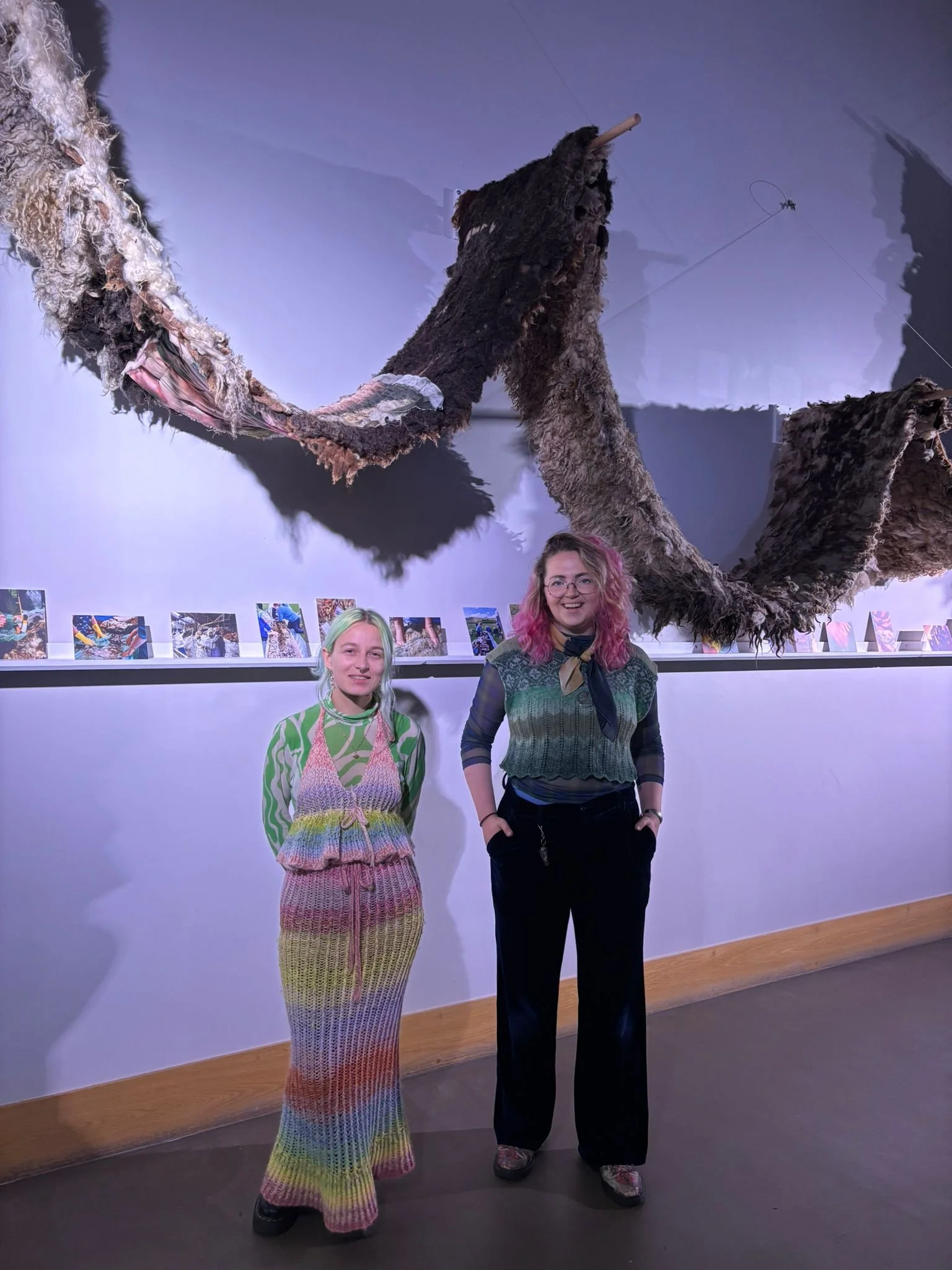
IMAGE: Lydia May Hann and Amanda Vesthardt
The big project that I've just got out of the way, is the giant wool felted tapestry which is currently hanging in Mareel at the Shetlands Arts Centre.
It was a, well in total, a nine-month project, in different parts of Shetland with different Shetland sheep, felting together with people in the community to make one giant tapestry that ended up being 17 metres long. It looks great panels with all the showing all the different colours and textures that are all Shetland Sheep they come in a lot of varieties. A good rainbow of colours and a lot of different varieties of wool within one breed of sheep.
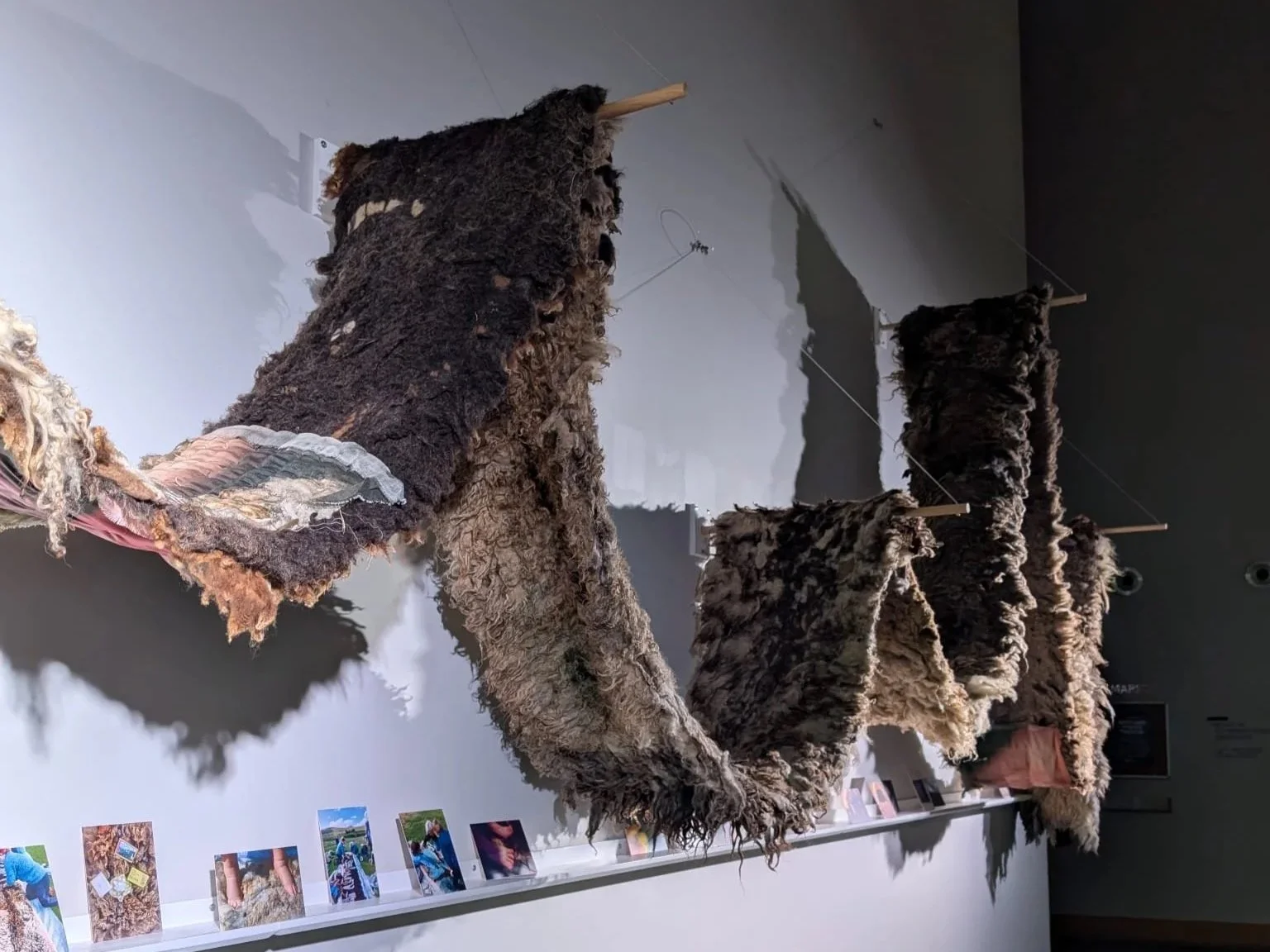
IMAGE: Lydia Hann
That sort of shows you how all the different elements of the industry came from this one sheep. It's got some really coarse heavy hair that comes from the genetics that the Vikings were using to make the weave sails that they wanted the really heavy hairy, itchy, you wouldn't want it anywhere near your skin. That’s why all the Norwegian sheep have got such lovely long, long, hairy wool because that's all the Vikings were spinning and then were making sails out of, to make a strong solid lightweight cloth. The sheep here have got a little bit of those genetics left over, but mostly they’re just little fluffy clouds.
It was four days of workshop with a big team effort, and then a few weeks of just me, felting and needle felting, any bits that didn't get caught down. It was hung up at Mareel in time for Wool Week, and it’ll be there for a good while for people to come and have a look and touch it!
Thank you so much Lydia for sharing your knowledge, tips and stories with us. We are always in awe of you!
To find out more about Lydia and her work, follow these links to her website and instagram:
