
Wool memories with Lydia May Hann
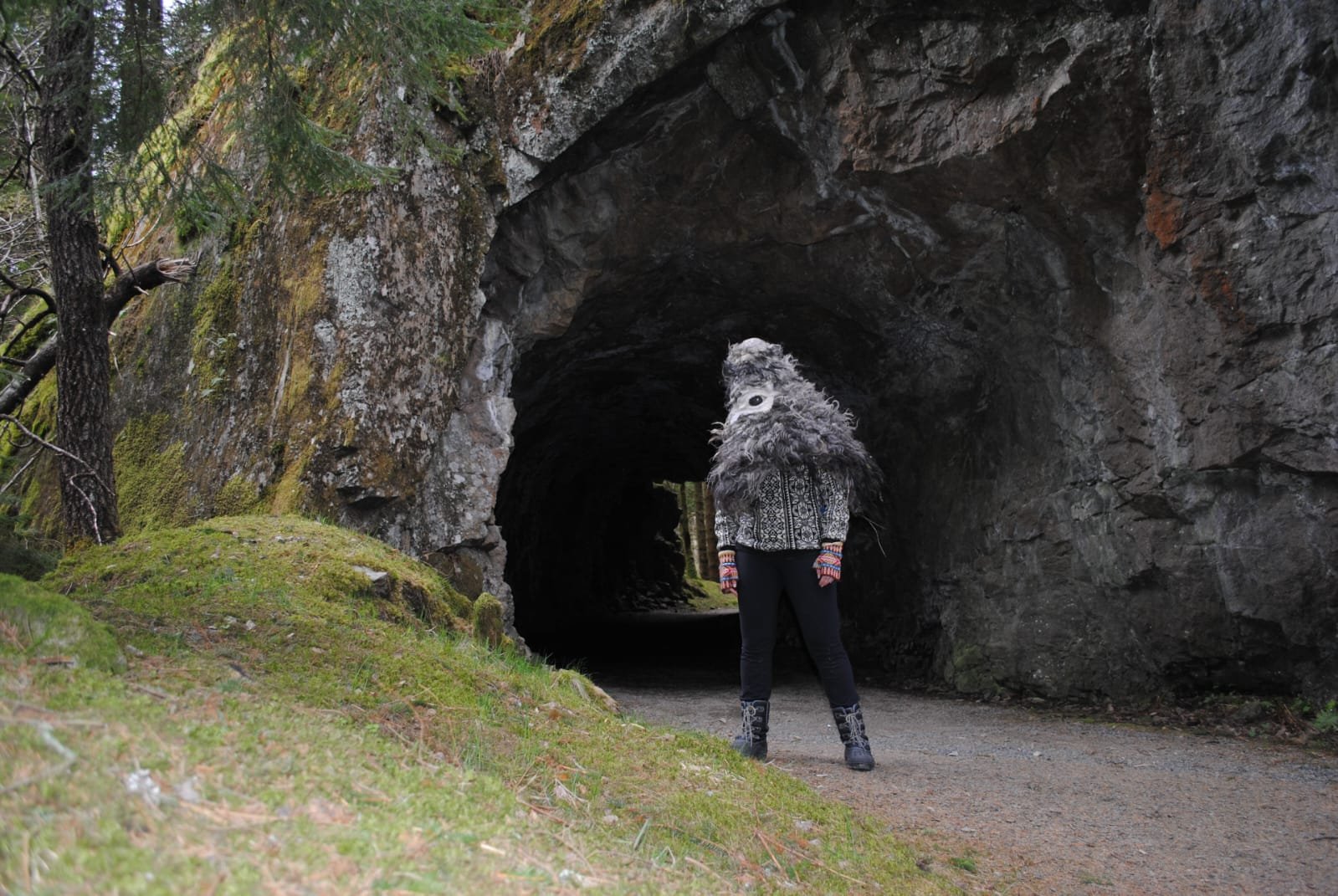
Image: Lydia during her residency at Velferden Scene in Sokndal, Norway.
Lydia May Hann is a knitwear and textile designer/technician from Shetland. She is also a multimedia artist who has exhibited and performed around the world, including Oslo’s National Museum. Lydia uses knitting machines to create phenomenal patterns and felting that celebrates the varieties and complexities of wool. I’ve known Lydia since we studied costume design together at Edinburgh College of Art, so I thought of Lydia first when Rosie and I discussed reaching out to people who work with wool for their insight into the material!
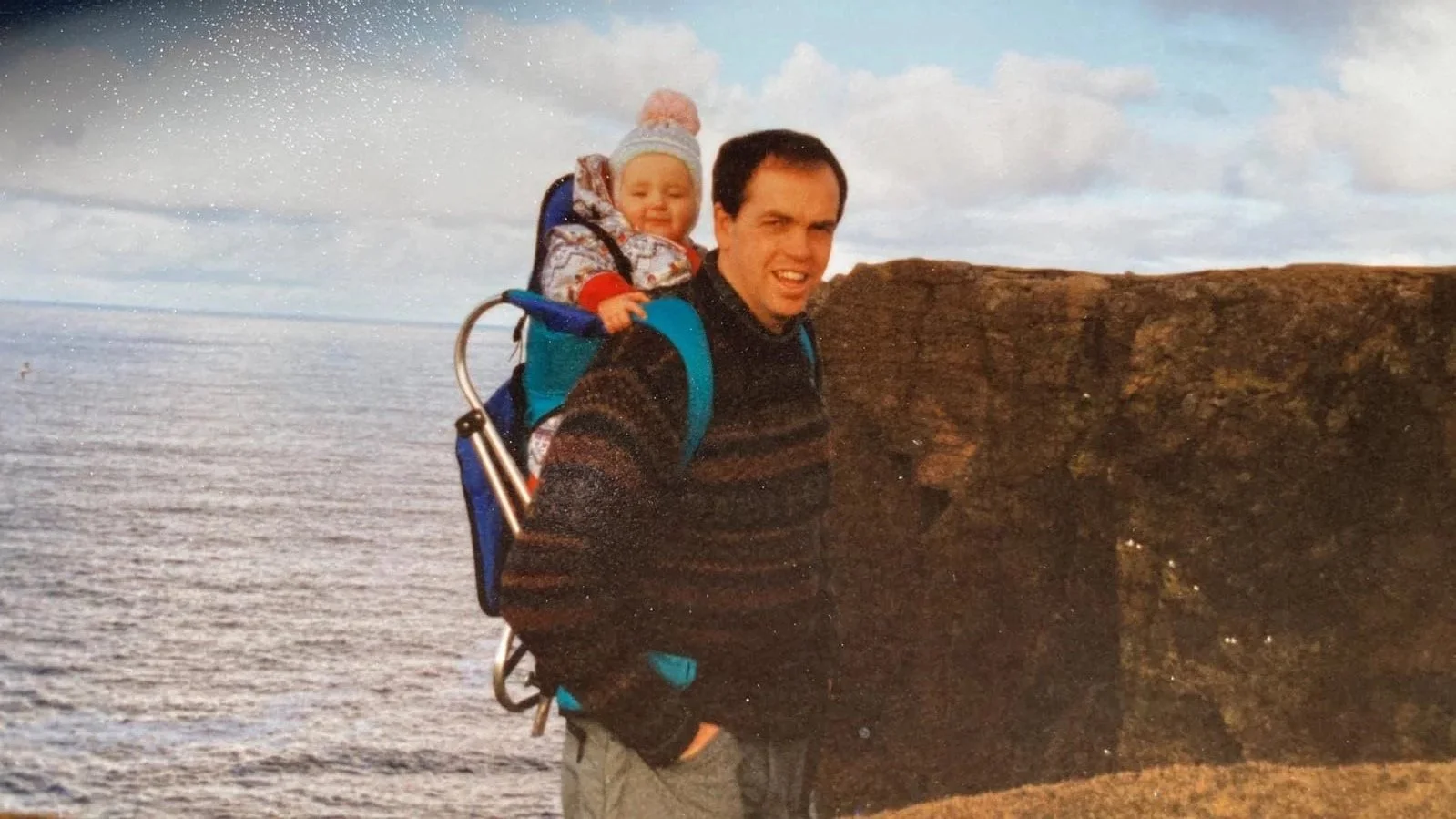
Image: Lydia with her Dad at Norwick beach in Unst, Shetland
Lydia has early memories of being creative in the kids club run by her mum in Unst, one of the most northern isles of the Shetland Islands, before the family moved to Bodø in Northern Norway. Settling into their new town, Lydia remembers getting creative with wool:
““We did a lot of felting.. I remember that becoming a regular craft activity. So wet felting, my mum would do that for birthday parties or the juleverksted . She’d have the house full of all of our friends, all wet felting in baking trays to make sitteplater.”
Juleverksted is a christmas workshop, and sitteplater are sitting mats.
“She would go along to the proper classes run by the local guild and learn to make felted robins. She made a whole Santa Claus, which was terrifying, wet felted 3D pieces - the size of a small toddler! It had a whole outfit. You’d go every week and felt another bit of it, but it was the stuff of nightmares
So there was lots of felting but I didn’t actually learn to knit really until Oddrun, my sort of adopted Norwegian granny, taught me a little bit, but I didn’t really catch on because I was really into sewing, so I’d do a lot of really basic sewing. I didn’t really start knitting until after Edinburgh, no one in the family taught me to knit, I could crochet so at Edinburgh I was crocheting, and I learnt to machine knit when they finally let us into the machine knitting room! At that point I wasn’t hand knitting very much. So it wasn't until yeah. It wasn't until after that, when I was working in Scarborough. I think it was watching a really early wool week, and I was seeing more wool week content online. So in maybe 2017, I decided I was gonna sit down and properly do some knitting and then I knitted a hat. It was a stormtrooper beanie for my friend Brigitte and it came out like 10 sizes too big, I still have it somewhere because I had to re-knit it, it came out enormous.
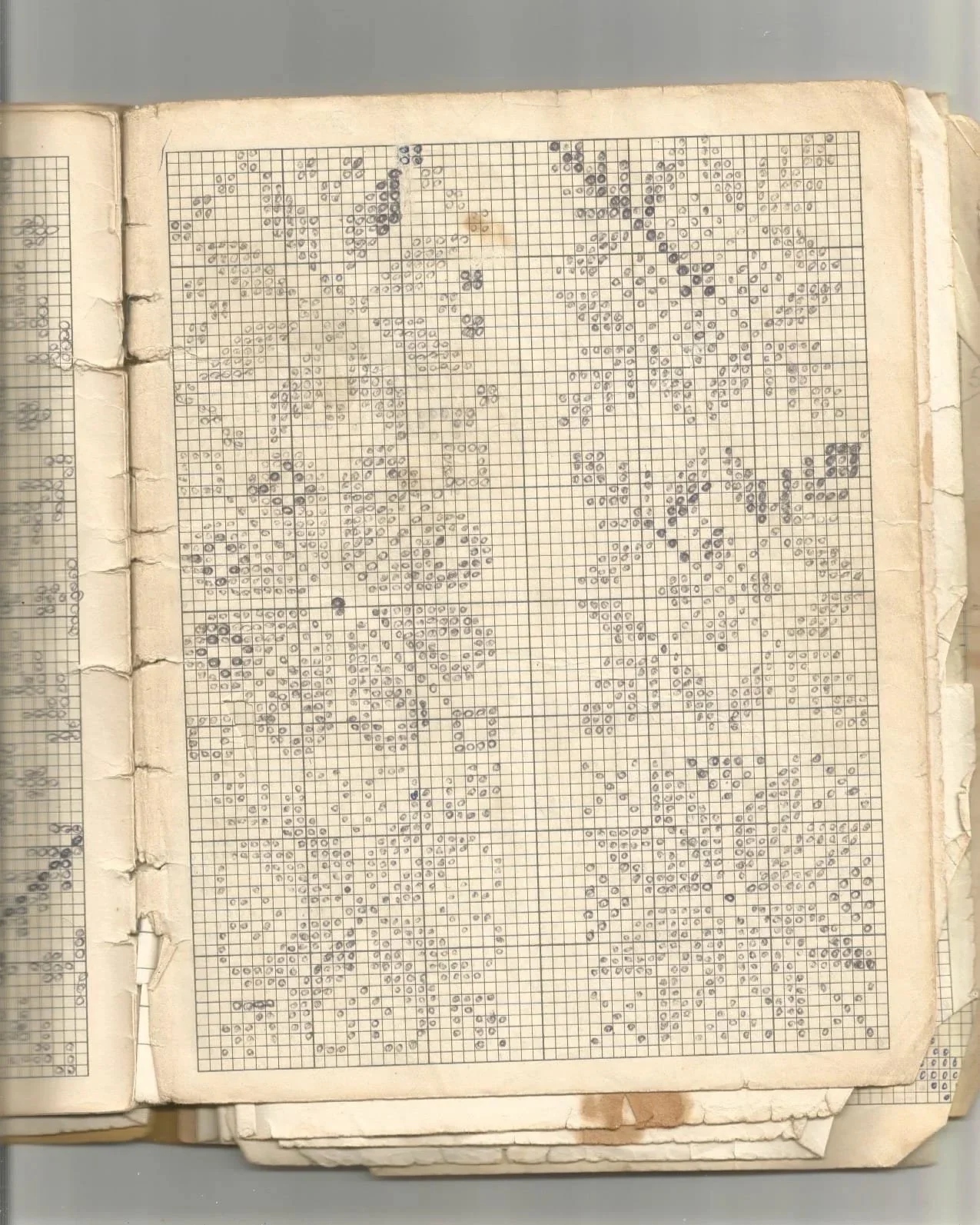
Image: Granny Barrie’s knitting pattern collection.
Grandma and mum don’t knit, so there wasn’t that connection to Shetland knitting. My Gran, dad’s mam, knit to keep herself busy, she taught my brother when he was quite young but I wasn't as interested then which I regret now. I remember only very vague mentions of Granny Barrie’s knitting patterns, but no one ever said ‘oh that’s what your great-grandmother did for a living!’, until I was well into my 20s. I think it wasn’t until I started knitting myself that anyone mentioned that that's what our family had done for a job.
Wool as a material was definitely always around, I was sewing with yarn into felt.”
Do you have a favourite or memorable wool garment?
“Oddrun was providing all of our knitwear for us. We turned up in a Norwegian kindergarten, 3 small children, and we did not have knitted underwear. We didn’t have longjohns, we didn’t have a little vest and a jumper, with matching gloves and a hat. She immediately took us into her roster. So I was head to toe - selbuvotter - the whole works, with giant socks! As well as rødnisse and blånisse hats every christmas.”
Selbuvotter (Selbu mittens) are a traditional mitten pattern from Norway. Rødnisse and Blånisse are red and blue elves which come from Norwegian folklore, and feature in christmas tv series.
“I don’t know how she had time for anything else, she just sat and knitted all the time, for an army of various grandchildren and now great-grandchildren. She kept us in her roster for years, we’d get a pair of knitted socks every Christmas.”
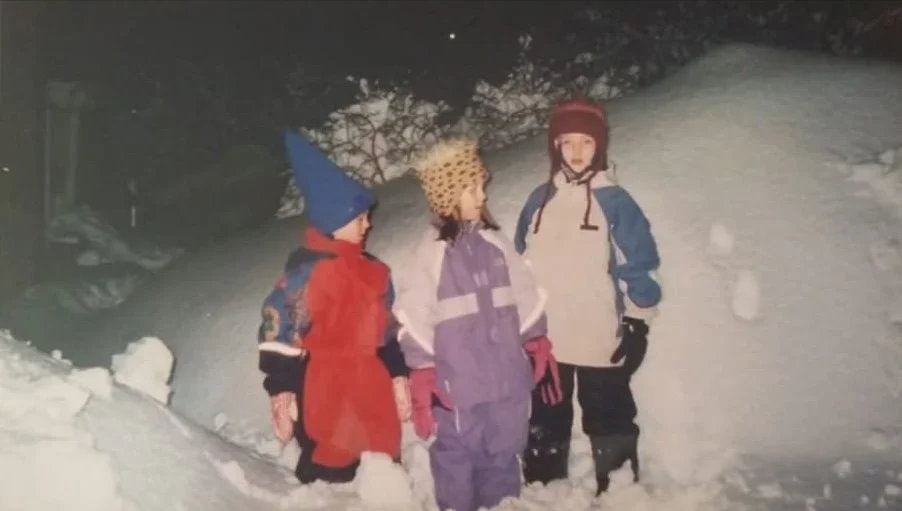
Image: The Hann siblings in Norway. Nick is wearing his felted blånisse hat from Oddrun.
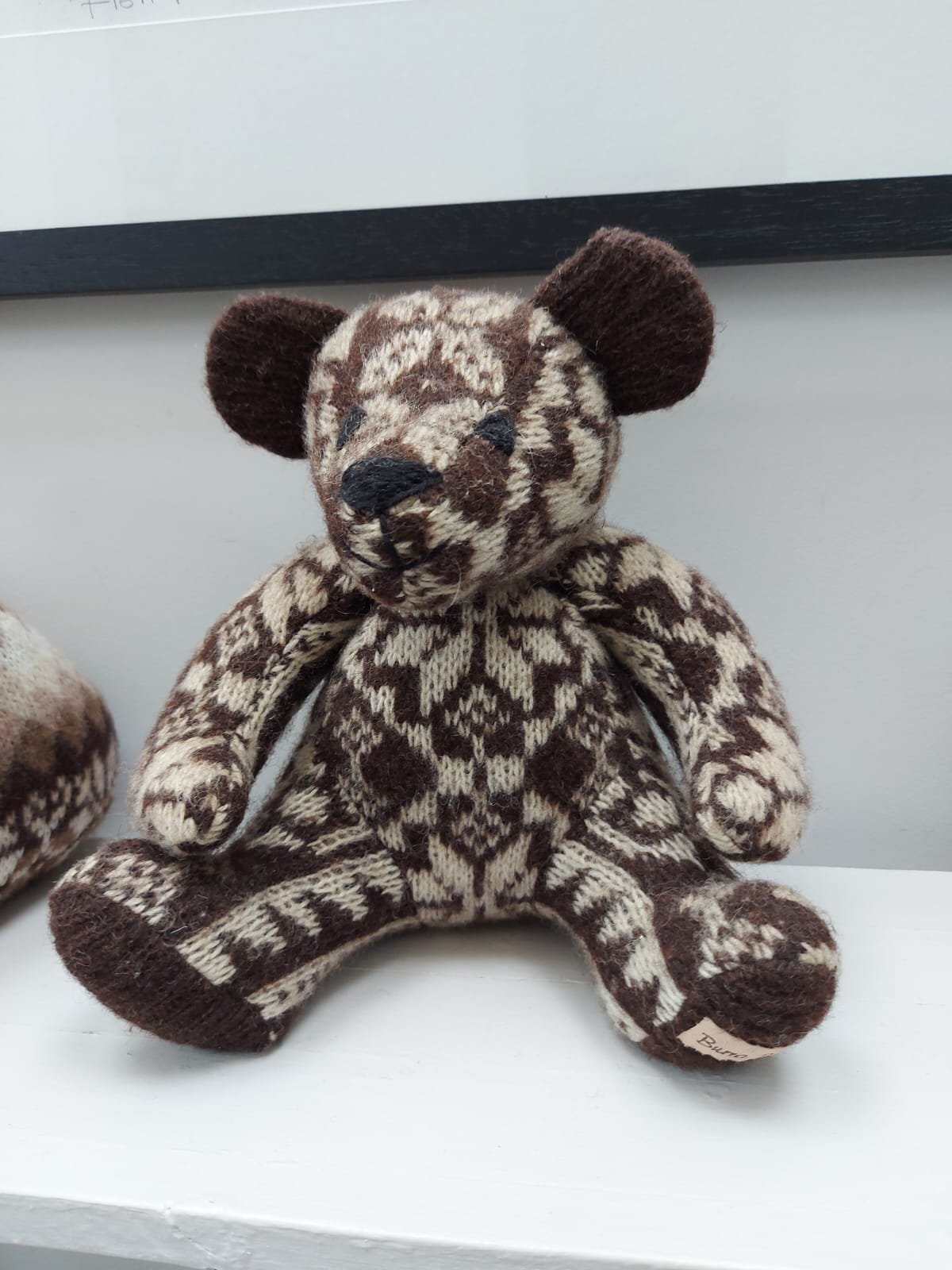
Image: One of the Hann family Burra bears.
“We also have a Shetland family archive of jumpers, our personal collection! They are all of Great-granny Barrie’s jumpers that she knit. When Papa died, Mum had a lot of them turned into Burra bears. Lovely lovely things, they’re beautiful, there’s a woman who I think has spent 20 years making them. Either people send her a jumper they don’t wear anymore or, maybe something significant like Granny’s cardigan, and she’ll turn it into this really beautiful bear.
On Instagram you can see her sharing the before and after of the jumper that she has just cut up, I don’t know how she does it!
At that point, when the bears were made, I was 11, so my Mum just hadn’t predicted that we were going to want to wear these jumpers that Papa had been wearing so she had them turned into bears. We don’t have as many jumpers as we could have done but we still have all the bears, we have a bear each.”
“We have four pieces in the family archive, three Fairisle jumpers and a beautiful lace cardigan, that started its life as a jumper then somebody steeked it, which looks terrifying. It’s knitted in rayon, which was really popular in the 20s. There was a big marketing push, from a company making it, to have Shetland knitters knit with it, they had competitions and were sent free samples. It’s a nightmare to knit with, so slippery and it splits - so it’s like a thick, multi-multi-stranded rayon yarn. Really heavy, cold to the touch, it’s brilliant. It would have been knitted up in Shetland lace and fairisle, and it’s all this beautiful shiny yarn. Then somebody steeked it so they could keep wearing it, and I cannot imagine steeking that yarn. It just slips, I’ve repaired it a few times, it just twists and flips and moves around. So it’s lace around the bottom and then fairisle all the way up, in soft pastels in pink and blue and green.
We don’t totally know who knitted that, Grandma thinks it was possibly an aunt, but Mum’s had it a good while now. I used to wear it on nights out, no one gave me the context! I used to wear it when I was 17 to go out. This thing is from the 20s, what am I doing?! There’s a photo of me somewhere at a clubhouse, at a disco, and I’m wearing it over my tiny topshop dress. I feel like that’s a very Shetland attitude to all these jumpers, it’s another item of clothing, you’re meant to wear it.
Every year we go back through the collection to maintain and mend them. Do the big wash. All the jumpers that Nick (Lydia’s brother) has, he wears through them really quickly, so all the elbows need fixing every year.”
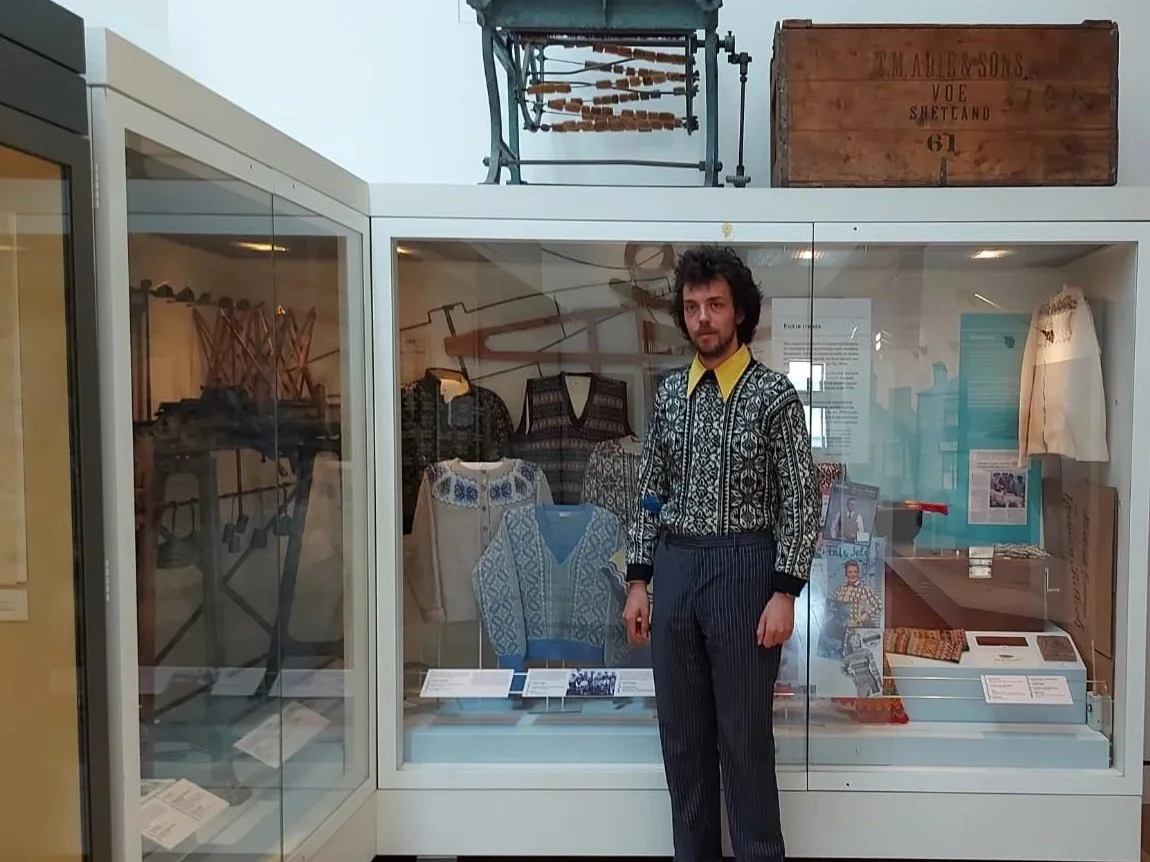
Image: Lydia’s brother Nick wearing one of the family jumpers.
Do you match the yarn for repairs?
“As much as I can, well one of them, I gave up and its got big pink, blue and red splodges all over it. Just as it’s been mended so many times, because Nick loves wearing them. We’d never stop him from wearing them, but because of all the musical instruments he plays, there’s lots of wear points. For one of the jumpers, I’ve completely replaced the cuffs with different colours, so it has pink cuffs now.”
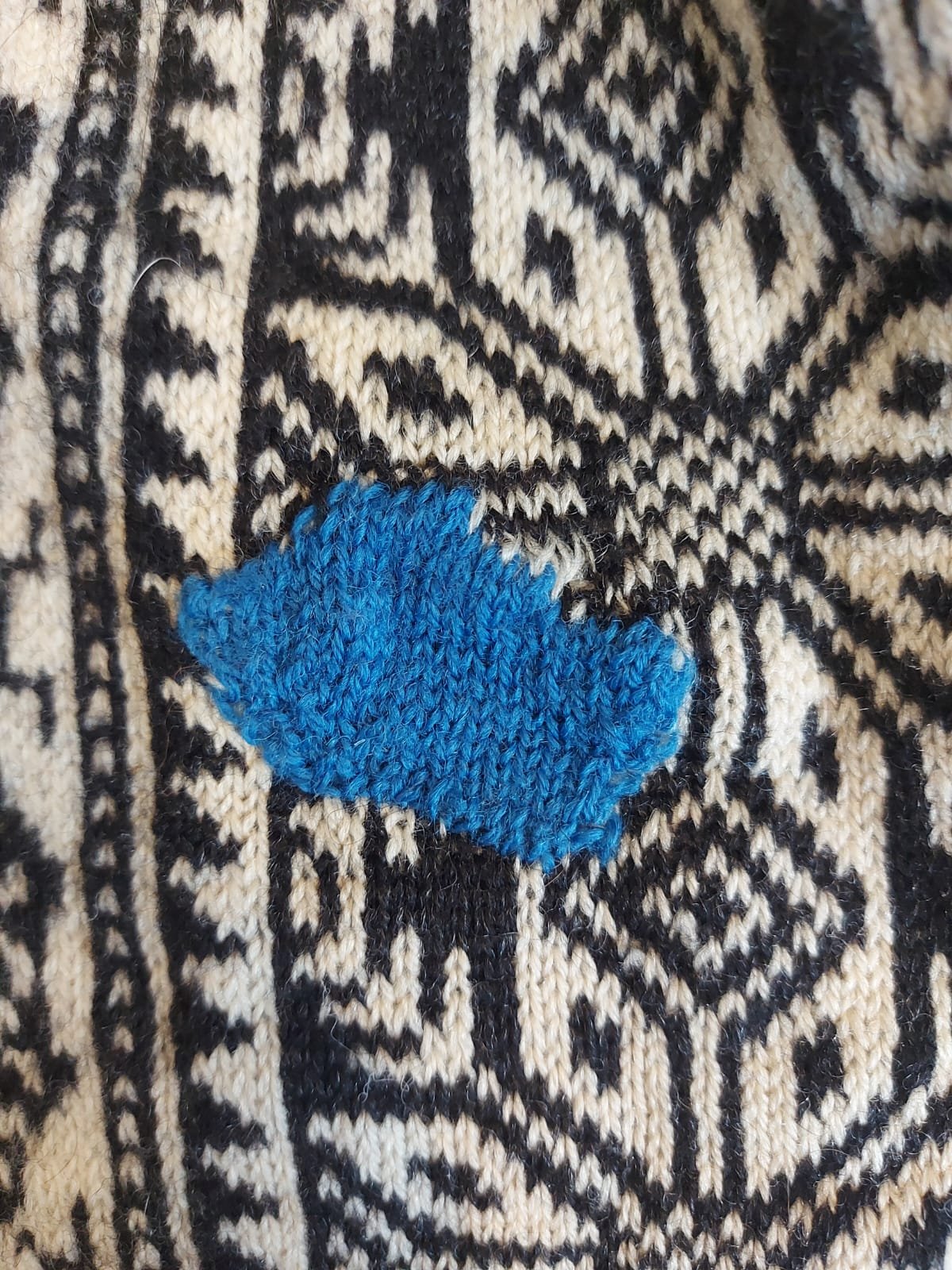
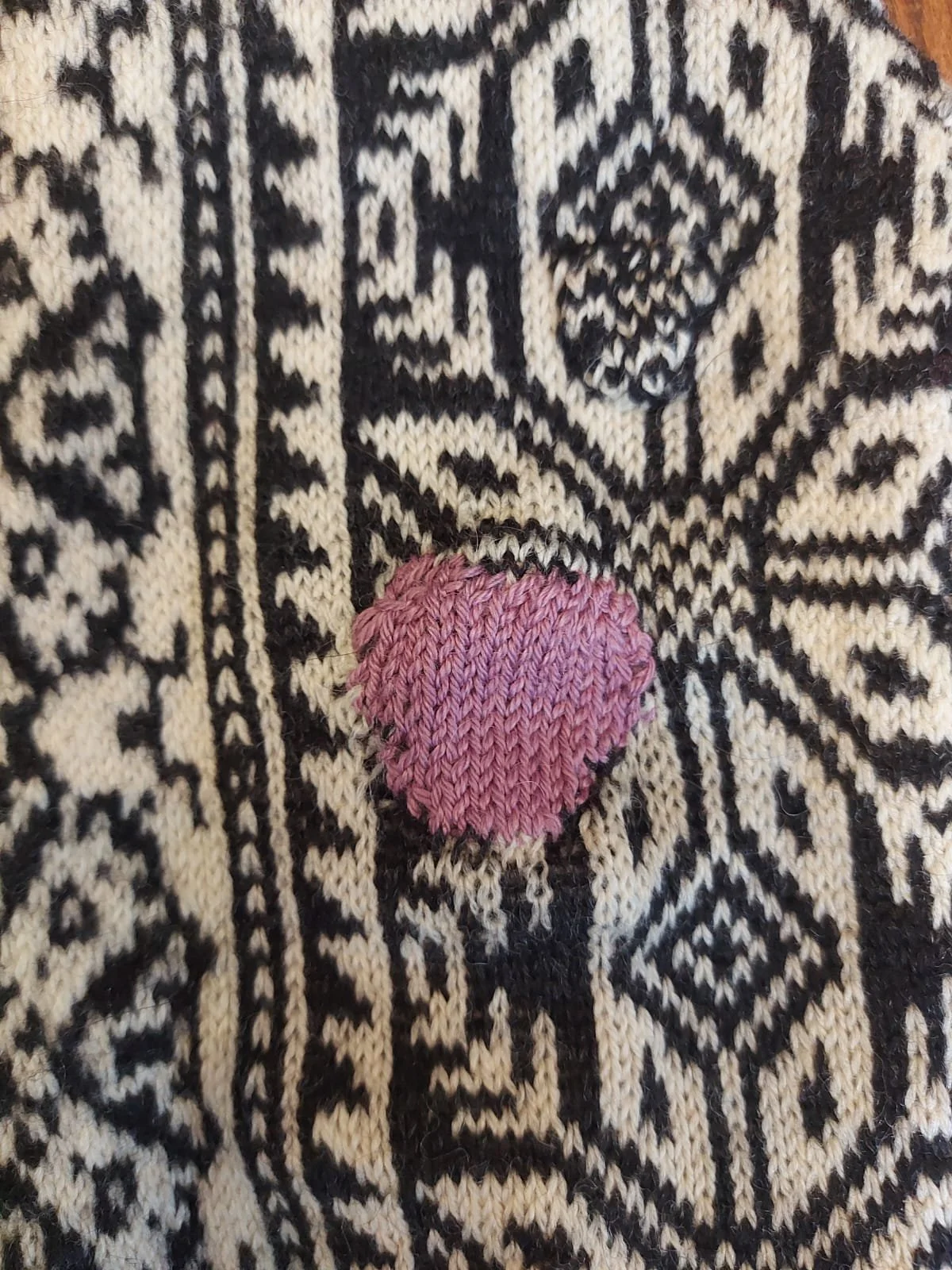
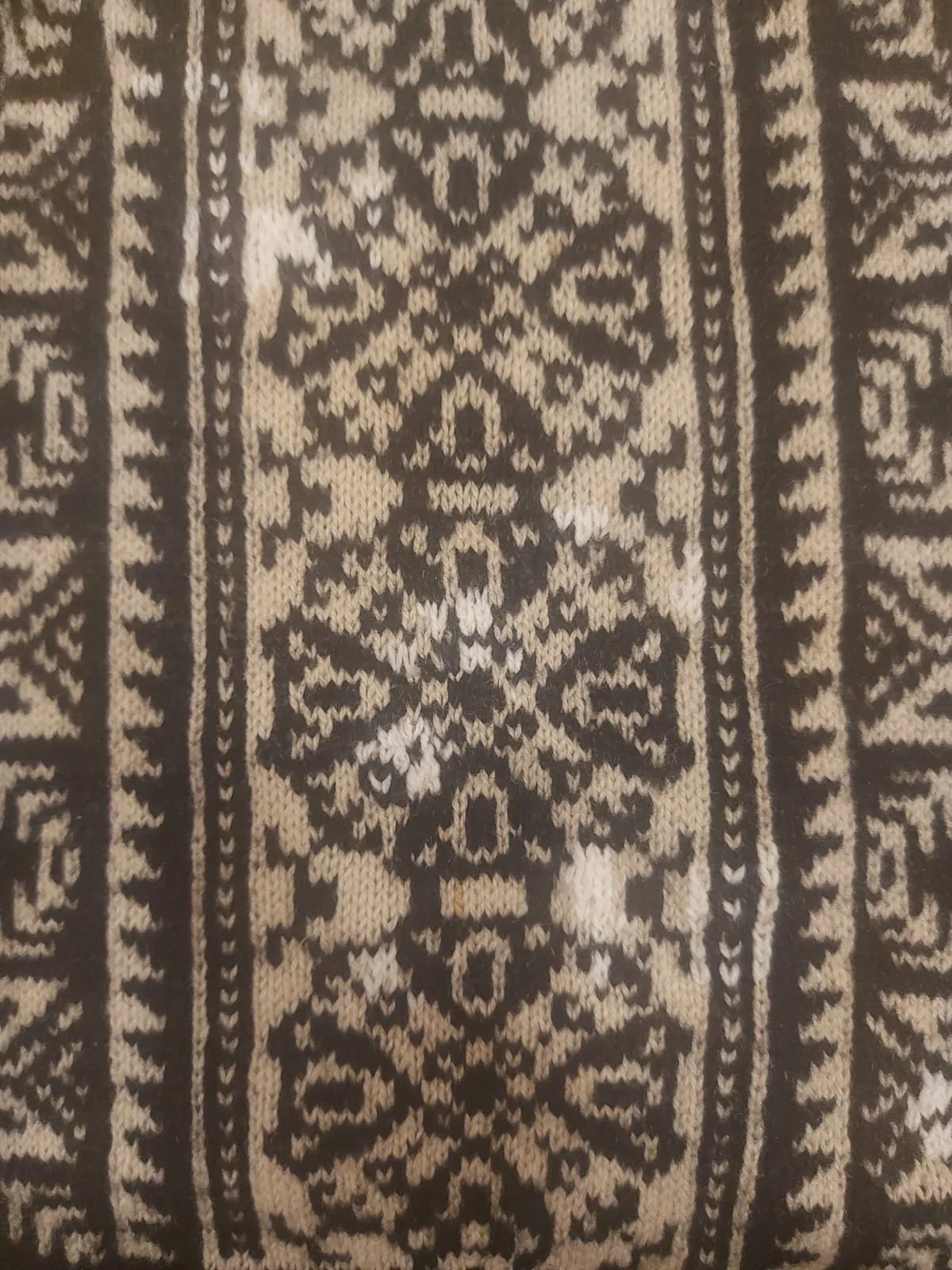
Images: Lydia’s mends on Nick’s jumper.
In part 2 of Lydia’s interview, we get Lydia’s tips for wearing and caring for wool. This will be shared shortly!
To follow Lydia and find out more about her work you can click on these links to her website and Instagram page:
